
Thursday, March 21, 2013


Monday, February 18, 2013
Be. BOLD.
BOLD BLACK AND WHITE
Black and white is gushing in every designers Spring '13 runway; whether masculine or feminine this color combination sticks out. Stripes, color blocking, geometric shapes, or a mix of them all- You will be on trend. The perfect accessory? A&O Gum Ball Earrings gives the texture detail with simplistic colors.
-Maranda
Black and white is gushing in every designers Spring '13 runway; whether masculine or feminine this color combination sticks out. Stripes, color blocking, geometric shapes, or a mix of them all- You will be on trend. The perfect accessory? A&O Gum Ball Earrings gives the texture detail with simplistic colors.
-Maranda


How to incorporate Spring 2013 trends into the still cold February
LEATHER LEATHER LEATHER
Traditionally leather has always been a cold weather detail, moving forward to Spring 2013 it’s everywhere! Lapels, trim’s, hem’s and full garments, black, brown, and every color of the rainbow, leather is the oh so lux detail to not miss! So how to incorporate this trend to the still cold weather? Keep your purchase in current season colors; mix with jeans or a pair of boots and your ready to send winter on its way! How to accessorize? Try small details like A&O Dogeared Gold Moroccan Earrings!
- Maranda


Wednesday, February 13, 2013
THE LATEST IN JEWELRY TRENDS
Jewelry trends come from the three Rs: red carpet, runway, and real life. Here’s a list of 12 trends compiled through jewelry market research of new styles at shows, fashion designs for spring, and top looks at awards shows.
Button and Stud Earrings: A hit on the red carpet this year and the subject of some new collections, button-style and stud earrings—particularly in fresh and unexpected—are a must-have in any wardrobe.
Chandelier Earrings: Are they back? Well, small versions may be. New modestly sized styles were evident in recent market visits with LAGOS, John Hardy, and more. Plus, a few more were recently photographed for the February 2012 issue of JCK.
Hair Jewelry: Evident at bridal runway shows and at some red carpet events, barrettes, hair bands, tiaras, and brooches pinned in place have particular appeal to younger clients for their whimsical effect. (Check out the February 2012 issue of JCK for selections.)
Jazz Age Styles: The flapper dresses from the spring 2012 runway shows combined with the now-filming remake of The Great Gatsby and HBO’s current hit Boardwalk Empire series will translate into flower motifs and Art Deco-inspired looks in bridal and fine fashion jewelry.
Moveable and Interchangeable Jewels: Ear charms are a growing category that offer multiple looks for owners. Plus, the inherent movement in these styles and other types—like mixed-link drop earrings—can mix well with voluminous fashions and those that demand drama.
Pearls: Abundant, pretty, and affordable, freshwater and mother-of-pearl are evident in new collections.
Pendant Necklaces: Layerable and no sizing required, pendants can accessorize a range of dresses—a "foolproof" look for spring collections like BCBGMAXAZRIA, according to Style.com—from shift styles to tailored numbers.
Pyrite: Fun, funky, and inexpensive, pyrite is appearing in a number of indie jewelry designers’ collections. Plus, its smoky color is ideal to transition into fall fashion.
Sporty Aesthetics: Think brightly colored watches to coordinate with hoodies and neoprene accents evident on 2012 spring runways, or "tiny token jewelry". (Look for sporty watches in the December/January issue of JCK.)
Geometric Shapes and Tribal Effects: Angular pieces like square rings and bangles will work well with column dresses while horn and leather accents will speak to tribal looks in fashion.
Tangerine Tango: It’s Pantone colors for 2012 in addition to being widely shown at spring runway shows. Coordinate other bright colors with it—called color blocking (see how celebs like Emma Stone do it) and keep it in stock in the form of stones like citrine, fire opal, and more.
Yellow Gold and Stones: The rich gold color was a familiar sight on spring runways and golden stones like beryl and rutilated quartz are abundant at shows, suggesting that both will be prevalent in future lines. Plus, gold's price has dropped a bit, further reinforcing the ongoing gold standard.
Thursday, January 24, 2013
TOP 5 WAYS TO DRESS WITH STYLE THIS SPRING
***Take note to get ahead of the curve and start shopping now***
Ruffles – Frills aren’t just child’s play anymore. Ruffles exude a certain feminine spirit that may be intimidating to some, but the trend is completely wearable by any woman. Ruffles are dramatic and have the powerful ability to jazz up any outfit. Tip: Remember that a little goes a long way. You don’t want ruffles to appear overwhelming and take away from an ensemble.
 (Credit, Kelly Johnston)
Stripes – It’s nearly impossible to go wrong with stripes. Stripes are a classic and timeless wardrobe staple for people worldwide. They serve as a closet must-have and are an effortless go-to. Unlike polka dots and other patterns, stripes, whether the lines are thick or thin, pair well with virtually anything. Black and white stripes along with nautical-inspired stripes are most common, but have a little fun with multi-colored and disproportionate stripes.
Tip: Consider striped pieces as an investment. If cost per wear were calculated, you’d certainly get your money’s worth.

(Credit, Kelly Johnston)

Rag & Bone Spring 2013 (credit: Eamonn McCormack/Getty Images)
Bermuda Shorts – Bermuda shorts often carry a tropical, beach-themed connotation, but subtle and appropriate options aren’t hard to come by. While the length, usually just above the knee, may not be flattering for women of shorter stature, trial and error proves effective. A tucked-in blouse and belt is all you need when dressing up Bermuda shorts. American designers Peter Som, Rag & Bone and DKNY all designed Bermuda shorts for their spring 2013 collection.
Tip: Avoid wearing high heels and stick with flats or wedges with shorts.
Monday, July 23, 2012
What’s Your Sign? Leo
SAT, JULY 21, 2012

Find out what this month, the sun sign of Leo (July 22 – August 22), has in store for you. Astrology expert Susie Cox tells all….
Leo
Happy birthday to the regal sign of Leo! Mercury is in retrograde for you until August 8th, so it’s time to rethink your responsibilities and possibly delegate some to others.
Happy birthday to the regal sign of Leo! Mercury is in retrograde for you until August 8th, so it’s time to rethink your responsibilities and possibly delegate some to others.
Virgo
Your sign gets a break after all those months of Mars in Virgo. You will feel the best on July 22nd, 23rd and 31st. Take some time out for yourself on those days.
Your sign gets a break after all those months of Mars in Virgo. You will feel the best on July 22nd, 23rd and 31st. Take some time out for yourself on those days.
Libra
Both Mars and Saturn are in your sign, which could indicate a change in your relationship life. The moon joins them for the power dates of July 24th and 25th.
Both Mars and Saturn are in your sign, which could indicate a change in your relationship life. The moon joins them for the power dates of July 24th and 25th.
Scorpio
Your power dates start on August 20th and last until early October. The sexy planet Mars is going through your sign, making you Scorpios even hotter!
Your power dates start on August 20th and last until early October. The sexy planet Mars is going through your sign, making you Scorpios even hotter!
Sagittarius
This is the last month in the next 19 years that the North Node will be in Sagittarius. The Node is your point of success, blessing you. Finish your big projects this month because new ones are on the horizon.
This is the last month in the next 19 years that the North Node will be in Sagittarius. The Node is your point of success, blessing you. Finish your big projects this month because new ones are on the horizon.
Capricorn
Your power dates are July 30th and 31st, when the moon joins Pluto in your sign. You will feel the most powerful at that time, so plan to take charge.
Your power dates are July 30th and 31st, when the moon joins Pluto in your sign. You will feel the most powerful at that time, so plan to take charge.
Aquarius
The full moon will be in your sign on August 1st. This full moon is one of the most fun of the year, so get a little wild.
The full moon will be in your sign on August 1st. This full moon is one of the most fun of the year, so get a little wild.
Pisces
Your power dates are August 3rd, 4th and 5th. You will feel very connected to others, even if they are far away. Since you’re a water sign, plan to spend some time by an ocean or lake — any large body of water will do.
Your power dates are August 3rd, 4th and 5th. You will feel very connected to others, even if they are far away. Since you’re a water sign, plan to spend some time by an ocean or lake — any large body of water will do.
Aries
Aries is in focus with the wild planet Uranus moving through your sign. Aries power dates are July 24th and August 5th, so you might feel a bit more feisty than usual. Tackle something and change it totally.
Aries is in focus with the wild planet Uranus moving through your sign. Aries power dates are July 24th and August 5th, so you might feel a bit more feisty than usual. Tackle something and change it totally.
Taurus
Taurus is the sign of creature comforts and deserves the best. Plan a luxurious getaway from July 21st to July 23rd. Indulge in an extravagance.
Taurus is the sign of creature comforts and deserves the best. Plan a luxurious getaway from July 21st to July 23rd. Indulge in an extravagance.
Gemini
Both loving Venus and fortunate Jupiter are in your sign. Venus will leave on August 7th, so be sure to pamper yourself before then.
Both loving Venus and fortunate Jupiter are in your sign. Venus will leave on August 7th, so be sure to pamper yourself before then.
Cancer
Venus enters your sign on August 8th and will remain there until September 7th. Surprise everyone with an impromptu family reunion during this time. Love of family will be in the air.
Venus enters your sign on August 8th and will remain there until September 7th. Surprise everyone with an impromptu family reunion during this time. Love of family will be in the air.
Wednesday, June 13, 2012
Stacked Arm Candy - More is Better - Even More is Best !
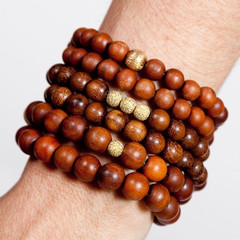
This season's big trend is Arm Candy - it's all about stacking and layering all different styles of bracelets on top of bracelets on top of bracelets. Arms should always be loaded up. Here are some looks I love.

Starting with the BEST and MOST BEAUTIFUL stackers~ Vahan.
You can just start with one and keep adding and adding and adding....


Loving Emerald green right now - all these shades of green look great together.

What a mix~Horseshoe cuff, leather and gold wrap, classic gold initial charm bracelet, and classic zodiac pearl bracelet.


So try it out - Stack them up - More is better and even more is best - Happy Stacking!
Friday, May 11, 2012
May Birthstone: Origin, History, and Powers of the Emerald
By Melody Jones
Takeaways
- The word emerald derives from the Latin term "smaragdus", meaning green gem.
- Columbian emerald mines have been in production for hundreds of years.
- Emeralds are symbols of love, fertility, and rebirth.
Emerald is the birthstone for May. Ranging in color from light to deep green, emeralds were Cleopatra's favorite gemstones. Her admiration was so deep, she claimed the ancient Egyptian emerald mines as her own.
The word emerald derives from the Latin term "smaragdus", simply meaning green gem. Emeralds are from the beryl family of minerals that includes aquamarine, the March birthstone. Their color comes from small quantities of chromium.
Red emeralds are the most rare of this gemstone. They are so difficult to locate and cut, that jewelry containing red emeralds is prohibitively expensive.
May Birthstone: Origin of Birthstones
How certain stones came to be connected to specific months is cloudy. Some speculate the birthstone originates from Biblical times when a priest's breastplate was adorned with twelve different colored gems. Over time, the number twelve became connected to months of the year and to the zodiac.
People began wearing a different gem each month as a sort of talisman, believing each stone held certain powers. Gradually, specific gems became attached to specific months and zodiac signs. People then wore the gem associated with their birth month all year long.
Fast-forward hundreds of years to 1912 in Kansas City, Missouri. The American National Association of Jewelers created a birthstone list, assigning different stones to each month. The birthstone list was controversial because people thought it was developed purely for commercial purposes. Even so, it is accepted worldwide today as the definitive list of birthstones.
May Birthstone: History
Ancient Egyptians established emerald mines before Cleopatra's birth. Tools were discovered in the mines dating back to Ramses II, around 1300 B.C. Worn by Egyptian royalty, emeralds were also buried with the dead. Though beautiful, Egyptian emeralds were found to be lower quality once the Spanish discovered Columbian gems.
In the region now known as Columbia, ancient Muzo Indians established successful emerald mining operations possibly as early as 500 A.D. These mines were so well hidden, that it took invading Spanish Conquistadors twenty years to find the mines. It was another thirty years before the invaders conquered the fierce Indian tribe, forcing the natives to work in the very emerald mines they had used for hundreds of years. Since then, Columbian emerald mining operations have continued nearly uninterrupted.
May Birthstone: Beliefs and Healing Powers
Ancient Romans associated emeralds with the goddess of love, Venus, and believed the gems embodied fertility, faith and goodness. Ancient Greeks wore emeralds to honor Aphrodite, their own goddess of love, fertility, and beauty.
Considered to have healing properties, some believed that merely gazing upon an emerald could soothe one's eyes. It is said that the Emperor Nero had eyeglasses made of emerald so that he could watch gladiator games and maintain the health of his eyes.
Some believe emeralds can help stop bleeding, prevent epileptic seizures, protect from panic, and reduce a fever. It is said that emeralds can restore peace, clear the mind, and enhance one's clairvoyance.
May Birthstone: Characteristics and Geography
Nearly all emeralds have imperfections such as inclusions and small fractures. This is not seen negatively, but rather as part of the character of an emerald. To diminish these flaws, most emeralds are treated with an oil, sometimes tinted green.
Emeralds are fragile and can be easily chipped. To reduce this tendency and cause less stress, a special rectangular cut was developed called the "emerald cut".
Columbia is still a top emerald producer. Other emerald sources include Russia, Brazil, Zimbabwe, Nigeria, and Madagascar. North Carolina is the only significant emerald source in the United States.
May Birthstone: Care and Cleaning
Emeralds can easily be damaged, so remove jewelry when cleaning or doing chores. Do not expose to salt water or sudden temperature changes. Carefully clean emerald jewelry with a soft brush and warm water. Do not use steam cleaners or ultra-sonic devices, as these will remove oil coatings.
Emeralds, the May birthstone, are indeed soothing and beautiful to gaze upon. Historically associated with love, fertility, and rebirth, emeralds are a perfect choice for the springtime month of May.
Friday, April 13, 2012
THE HISTORY BEHIND ONE OF THE BEST BIRTHSTONES
APRIL
Diamond is the April birthstone. Known as one of the hardest substances on earth, diamonds are thought to be billions of years old (http://encarta.msn.com). The word diamond derives from an ancient Greek word, "adamas", meaning invincible.
APRIL
Diamond is the April birthstone. Known as one of the hardest substances on earth, diamonds are thought to be billions of years old (http://encarta.msn.com). The word diamond derives from an ancient Greek word, "adamas", meaning invincible.
Arguably the most prized of all crystals, diamonds come in a range of colors: clear, pink, purple, red, orange, yellow, blue, green, and black.
Color depends on the kind of impurities present. Blue ones have traces of boron, and yellow diamonds have minute amounts of nitrogen.
April Birthstone: Origin of Birthstones
How certain stones came to be connected to specific months is cloudy. Some speculate the birthstone originates from Biblical times when a priest's breastplate was adorned with twelve different colored gems. Over time, the number twelve became connected to months of the year and to the zodiac.
People began wearing a different gem each month as a sort of talisman, believing each stone held certain powers. Gradually, specific gems became attached to specific months and zodiac signs. People then wore the gem associated with their birth month all year long.
Fast-forward hundreds of years to 1912 in Kansas City, Missouri. The American National Association of Jewelers created a birthstone list, assigning different stones to each month. The birthstone list was controversial because people thought it was developed purely for commercial purposes. Even so, it is accepted worldwide today as the definitive list of birthstones.
April Birthstone: History and Beliefs about Diamonds
According to Encarta, there are Sanskrit texts that make reference to diamonds before 400 BC. This suggests that ancient peoples from India assigned value to these crystals.
Evidence of diamond cutting was found in Venice dating back to the 1330s. Once eastern trade routes opened, Europeans began trading diamonds in the early 15th century.
Ancient Hindus believed lightning bolts created diamonds. The Greeks had several theories about the origin of these gemstones. They believed they were tears of the gods, splinters of stars, or crystallized lightning.
April Birthstone: Healing Powers of Diamonds
During the middle ages, diamonds were thought to heal illness, especially problems relating to brain disease and the pituitary gland. The best way to cure disease was to take the crystal into bed with you to warm it up first. This way, it could draw out toxins.
Diamonds can enhance a person's level of clarity, balance, and abundance. They also amplify a person's energy, whether positive or negative, as well as the healing properties of other crystals. For example, if worn with amethyst, diamonds will increase that crystal's soothing and calming properties.
Wednesday, April 11, 2012
The History Behind Mother's Day in the USA
When the first English settlers came to America, they discontinued the tradition of Mothering Day. While the British holiday would live on, the American Mother’s Day would be invented—with an entirely new history—centuries later. One explanation for the settlers’ discontinuation of Mothering Day was that they just didn’t have time; they lived under harsh conditions and were forced to work long hours in order to survive. Another possibility, however, is that Mothering Day conflicted with their Puritan ideals. Fleeing England to practice a more conservative Christianity without being persecuted, the pilgrims ignored the more secular holidays, focusing instead on a no-frills devotion to God. For example, even holidays such as Christmas and Easter were much more somber occasions for the pilgrims, usually taking place in a Church that was stripped of all extraneous ornamentation.
Julia Ward Howe's Mother's Day Proclamaition of 1870
The first North American Mother’s Day was conceptualized with Julia Ward Howe’s Mother’s Day Proclamation in 1870. Despite having penned The Battle Hymn of the Republic 12 years earlier, Howe had become so distraught by the death and carnage of the Civil War that she called on Mother’s to come together and protest what she saw as the futility of their Sons killing the Sons of other Mothers. With the following, she called for an international Mother's Day celebrating peace and motherhood:
Arise, then, women of this day!Arise all women who have hearts,
Whether your baptism be that of water or of tears
Say firmly:
"We will not have great questions decided by irrelevant agencies,
Our husbands shall not come to us reeking of carnage,
For caresses and applause.
Our sons shall not be taken from us to unlearn
All that we have been able to teach them of
charity, mercy and patience.
"We women of one country
Will be too tender of those of another country
To allow our sons to be trained to injure theirs."
From the bosom of the devastated earth a voice goes up with
Our own. It says, "Disarm, Disarm!"
The sword of murder is not the balance of justice!
Blood does not wipe out dishonor
Nor violence indicate possession.
As men have of ten forsaken the plow and the anvil at the summons of war.
Let women now leave all that may be left of home
For a great and earnest day of counsel.
Let them meet first, as women, to bewail and commemorate the dead.
Let them then solemnly take counsel with each other as to the means
Whereby the great human family can live in peace,
Each bearing after his own time the sacred impress, not of Caesar,
But of God.
In the name of womanhood and humanity, I earnestly ask
That a general congress of women without limit of nationality
May be appointed and held at some place deemed most convenient
And at the earliest period consistent with its objects
To promote the alliance of the different nationalities,
The amicable settlement of international questions.
The great and general interests of peace.
The Rise & Fall of Howe's Mother's Day
At one point Howe even proposed converting July 4th into Mother’s Day, in order to dedicate the nation’s anniversary to peace. Eventually, however, June 2nd was designated for the celebration. In 1873 women’s groups in 18 North American cities observed this new Mother’s holiday. Howe initially funded many of these celebrations, but most of them died out once she stopped footing the bill. The city of Boston, however, would continue celebrating Howe’s holiday for 10 more years.
Despite the decided failure of her holiday, Howe had nevertheless planted the seed that would blossom into what we know as Mother’s Day today. A West Virginia women’s group led by Anna Reeves Jarvis began to celebrate an adaptation of Howe’s holiday. In order to re-unite families and neighbors that had been divided between the Union and Confederate sides of the Civil War, the group held a Mother’s Friendship Day.
Anna M. Jarvis's Mother's Day in 1908
After Anna Reeves Jarvis died, her daughter Anna M. Jarvis campaigned for the creation of an official Mother’s Day in remembrance of her mother and in honor of peace. In 1908, Anna petitioned the superintendent of the church where her Mother had spent over 20 years teaching Sunday School. Her request was honored, and on May 10, 1908, the first official Mother's Day celebration took place at Andrew's Methodist Church in Grafton, West Virginia and a church in Philadelphia, Pennsylvania. The West Virginia event drew a congregation of 407 and Anna Jarvis arranged for white carnations—her Mother’s favorite flower—to adorn the patrons. Two carnations were given to every Mother in attendance. Today, white carnations are used to honor deceased Mothers, while pink or red carnations pay tribute to Mothers who are still alive. Andrew's Methodist Church exists to this day, and was incorporated intothe International Mother’s Day Shrine in 1962.
US Government Adoption
In 1908 a U.S. Senator from Nebraska, Elmer Burkett, proposed making Mother's Day a national holiday at the request of the Young Men's Christian Association (YMCA). The proposal was defeated, but by 1909 forty-six states were holding Mother's Day services as well as parts of Canada and Mexico.
Anna Jarvis quit working and devoted herself full time to the creation of Mother's Day, endlessly petitioning state governments, business leaders, women groups, churches and other institutions and organizations. She finally convinced the World's Sunday School Association to back her, a key influence over state legislators and congress. In 1912 West Virginia became the first state to officially recognize Mother's Day, and in 1914 Woodrow Wilson signed it into national observance, declaring the second Sunday in May as Mother's Day.
The Fight Over Commercialization
The holiday flourished in the United States and flowers, especially white carnations, became very popular. One business journal, Florists Review, went so far as to print, “This was a holiday that could be exploited.” But the budding commercialization of Mother's Day greatly disturbed Jarvis, so she vociferously opposed what she perceived as a misuse of the holiday. In 1923 she sued to stop a Mother’s Day event, and in the 1930's she was arrested for disturbing the peace at the American War Mothers group. She was protesting their sale of flowers. In the 1930’s Jarvis also petitioned against the postage stamp featuring her Mother, a vase of white carnations and the word “Mother’s Day.” Jarvis was able to have the words “Mother’s Day” removed. The flowers remained. In 1938, Time Magazine ran an article about Jarvis's fight to copyright Mother's Day, but by then it was already too late to change the commercial trend.
In opposition to the flower industry’s exploitation of the holiday, Jarvis wrote, “What will you do to route charlatans, bandits, pirates, racketeers, kidnappers and other termites that would undermine with their greed one of the finest, noblest and truest movements and celebrations?” Despite her efforts, flower sales on Mother's Day continued to grow. Florist's Review wrote, “Miss Jarvis was completely squelched.”
Anna Jarvis died in 1948, blind, poor and childless. Jarvis would never know that it was, ironically, The Florist's Exchange that had anonymously paid for her care.
Subscribe to:
Posts (Atom)